

Where Time Slows Down in the Heart of Sichuan’s Capital
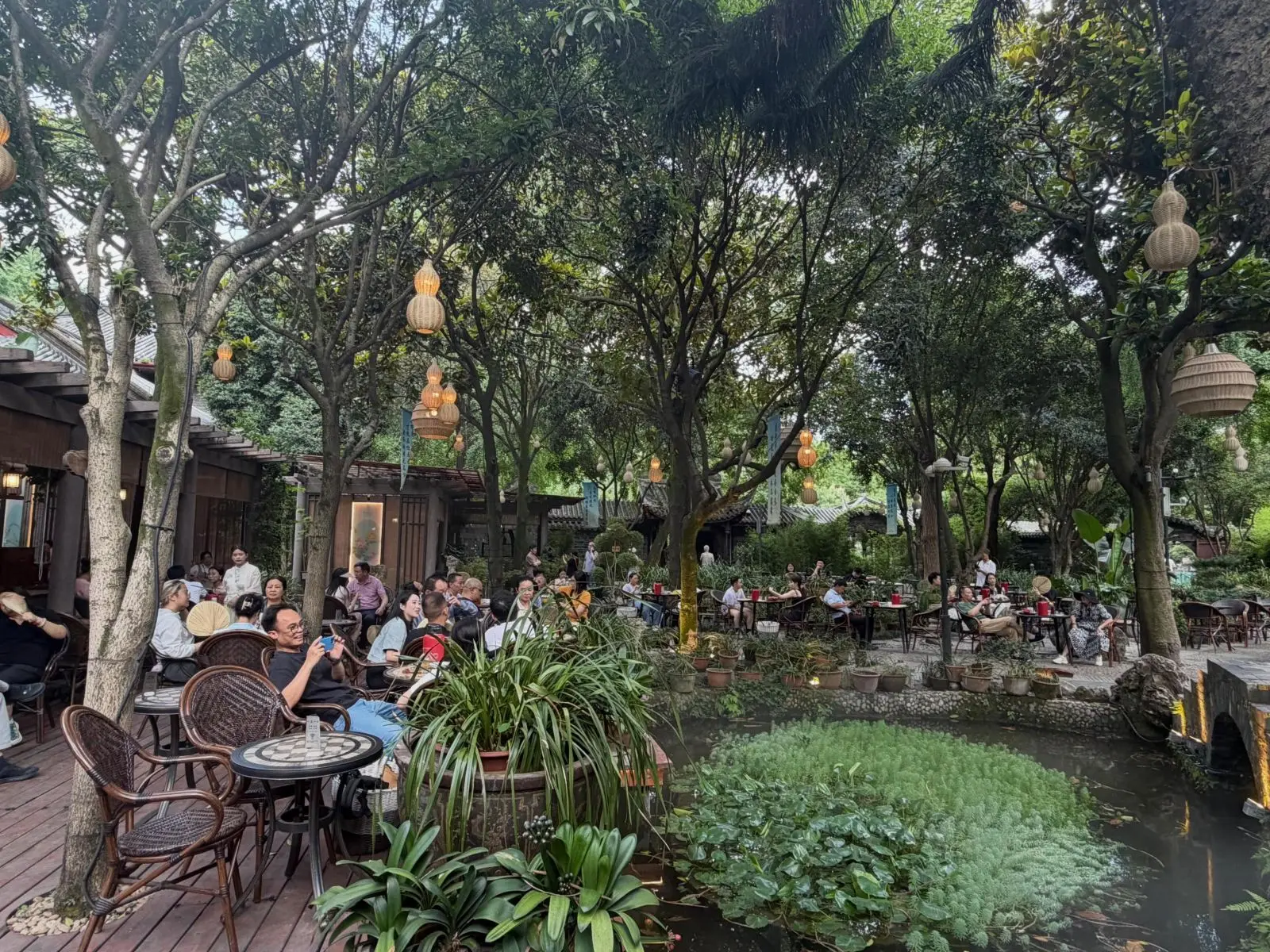
Just a short walk or a quick ride from the Celebrity Ruicheng Hotel at No. 68, Section 2, Renmin Middle Road, Qingyang District, Chengdu, lies a place where the frantic pace of modern Chinese city life simply dissolves. Renmin Park, known internationally as People’s Park, is not merely a green space tucked between skyscrapers and shopping districts. It is the living, breathing soul of Chengdu — a 112,000-square-meter sanctuary where the city’s legendary “slow life” (慢生活, màn shēnghuó) philosophy plays out in real time, every single day, beneath centuries-old trees and beside tranquil lotus ponds.
While Shanghai races, Beijing commands, and Shenzhen builds, Chengdu sips tea. This is the city that has embraced a cultural motto whispered through generations: “成都是一座来了就不想走的城市” — “Chengdu is a city you never want to leave once you arrive.” And nowhere is that sentiment more palpable, more tangible, more beautifully real than within the wrought-iron gates of Renmin Park.
This comprehensive guide will walk you through every unforgettable corner of People’s Park, from the aromatic clouds of jasmine tea drifting over Heming Teahouse to the rhythmic clink of ear-picking tools wielded by master craftsmen. Whether you are a first-time visitor to Sichuan or a seasoned traveler seeking deeper cultural immersion, this post will help you plan the perfect slow-life morning in one of China’s most extraordinary urban parks.
A Brief History of Renmin Park: From Imperial Gardens to People’s Sanctuary
Understanding the history of Renmin Park enriches every step you take along its winding paths. Established in 1911, the park was originally conceived as Shaocheng Park (少城公园), built on the grounds of the old Manchu quarter during the final years of the Qing Dynasty. It holds the distinction of being Chengdu’s first public park, a revolutionary concept in an era when gardens belonged exclusively to emperors, governors, and wealthy merchants.
After the founding of the People’s Republic of China in 1949, the park was renamed Renmin Park (人民公园) — literally “People’s Park” — symbolizing its transformation from an elite retreat to a democratic gathering space. Over more than a century of existence, the park has witnessed revolutions, wars, economic booms, and cultural renaissances, yet its fundamental purpose has never wavered: to provide a space where ordinary people can gather, relax, socialize, and simply be.
Today, Renmin Park stands as a national AAAA-level tourist attraction, a designation reserved for sites of exceptional cultural and historical significance. Its grounds encompass artificial lakes, traditional pavilions, bonsai gardens, memorial monuments, and, of course, the teahouses and cultural corners that make it world-famous.
The Philosophy of “Slow Life” (慢生活): Why Chengdu Does It Differently
Before diving into the specific attractions within Renmin Park, it is essential to understand the cultural concept of 慢生活 (màn shēnghuó) — the “slow life” — that defines Chengdu’s identity.
Unlike the Western “slow movement,” which often carries connotations of luxury, minimalism, or deliberate counter-cultural rebellion, Chengdu’s slow life is deeply democratic and unapologetically ordinary. It is not about expensive retreats or curated Instagram moments. It is about a retired factory worker spending three hours over a single cup of tea. It is about neighbors gathering to play mahjong under a canopy of ginkgo leaves. It is about the belief that the purpose of a day is not merely to fill it with productivity, but to savor its passing.
This philosophy is rooted in Sichuan’s agricultural abundance. The Chengdu Plain, irrigated by the ancient Dujiangyan system for over two thousand years, has long been called the “Land of Abundance” (天府之国, Tiānfǔ zhī Guó). When survival is not a daily struggle, culture turns toward pleasure, leisure, and the refinement of everyday rituals. Tea drinking, Sichuan opera, spicy cuisine, mahjong, and park culture all emerged from this fertile foundation.
Renmin Park is the purest distillation of this philosophy in urban form. Step through its gates, and the roar of Renmin Middle Road’s traffic fades into birdsong, the clatter of mahjong tiles, and the gentle splash of oars on water.
Getting to Renmin Park from Celebrity Ruicheng Hotel
One of the greatest advantages of staying at the Celebrity Ruicheng Hotel is its proximity to Renmin Park. Located at No. 68, Section 2, Renmin Middle Road, Qingyang District, Chengdu, Sichuan, 610061, China, the hotel sits in the cultural and political heart of the city, placing you within effortless reach of the park.
Walking Route
From the hotel, head south along Section 2 of Renmin Middle Road. The walk to the park’s main entrance takes approximately 8 to 12 minutes, depending on your pace. You will pass local breakfast stalls selling steaming bowls of dandan noodles (担担面) and hongyou chaoshou (红油抄手) — chili-oil wontons that make an ideal pre-park fuel. The route is flat, well-paved, and lined with plane trees that provide shade even in summer.
By Taxi or Ride-Hailing App
If you prefer a quicker arrival, a taxi or Didi (China’s ride-hailing service) from the hotel to Renmin Park’s main gate costs approximately 8 to 12 RMB and takes under five minutes in normal traffic. Simply show your driver: 人民公园 (Rénmín Gōngyuán).
By Metro
The park is also accessible via Chengdu Metro Line 2, with Renmin Park Station (人民公园站) located directly at the eastern entrance. From the hotel, you can walk to the nearby metro station or take a short taxi ride.
Hotel Contact Information
For concierge assistance, directions, or transportation arrangements, the Celebrity Ruicheng Hotel can be reached at:
- Website: https://celebrityruichenghotel.com
- Telephone: +86-28-88033333
- Address: No. 68, Section 2, Renmin Middle Road, Qingyang District, Chengdu, Sichuan, 610061, China
The hotel’s multilingual front desk staff are well accustomed to assisting international guests with park directions, tea ceremony recommendations, and local cultural tips.
Heming Teahouse (鹤鸣茶社): The Crown Jewel of Chengdu’s Tea Culture
A Century of Steeping Tradition
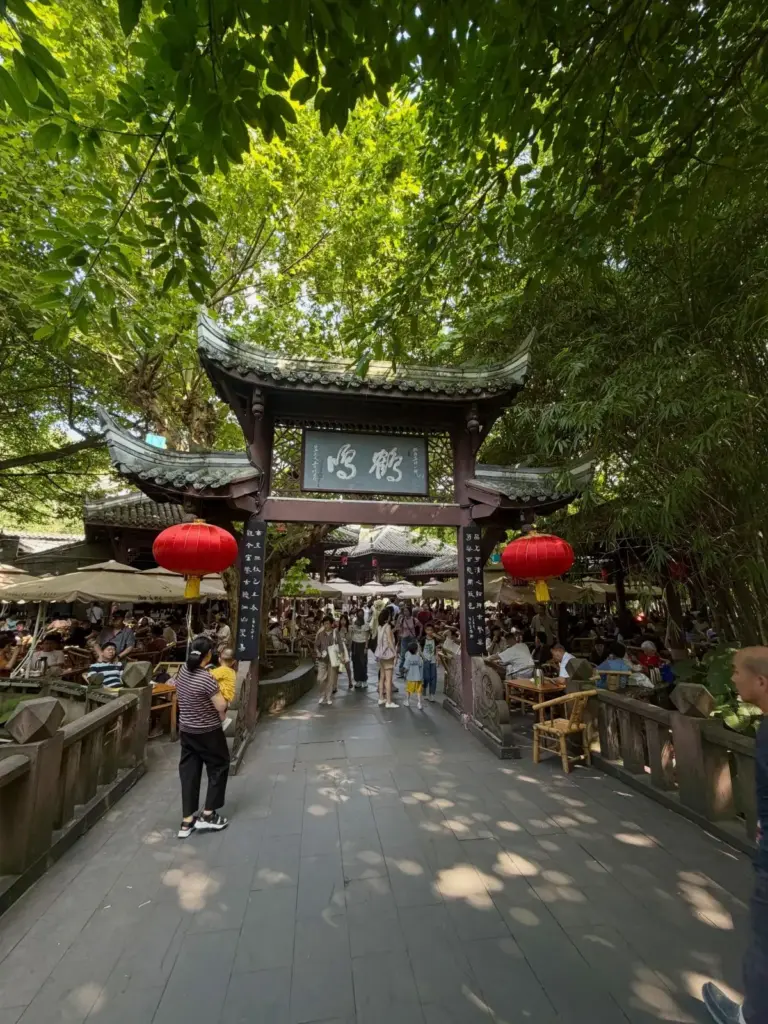
No visit to Renmin Park — and arguably no visit to Chengdu itself — is complete without spending a morning at Heming Teahouse (鹤鸣茶社, Hèmíng Cháshè). Founded in 1923, Heming is one of the oldest and most iconic teahouses in all of Sichuan province. Its name, meaning “Calling of the Cranes,” evokes the elegance and tranquility that have defined the establishment for over a hundred years.
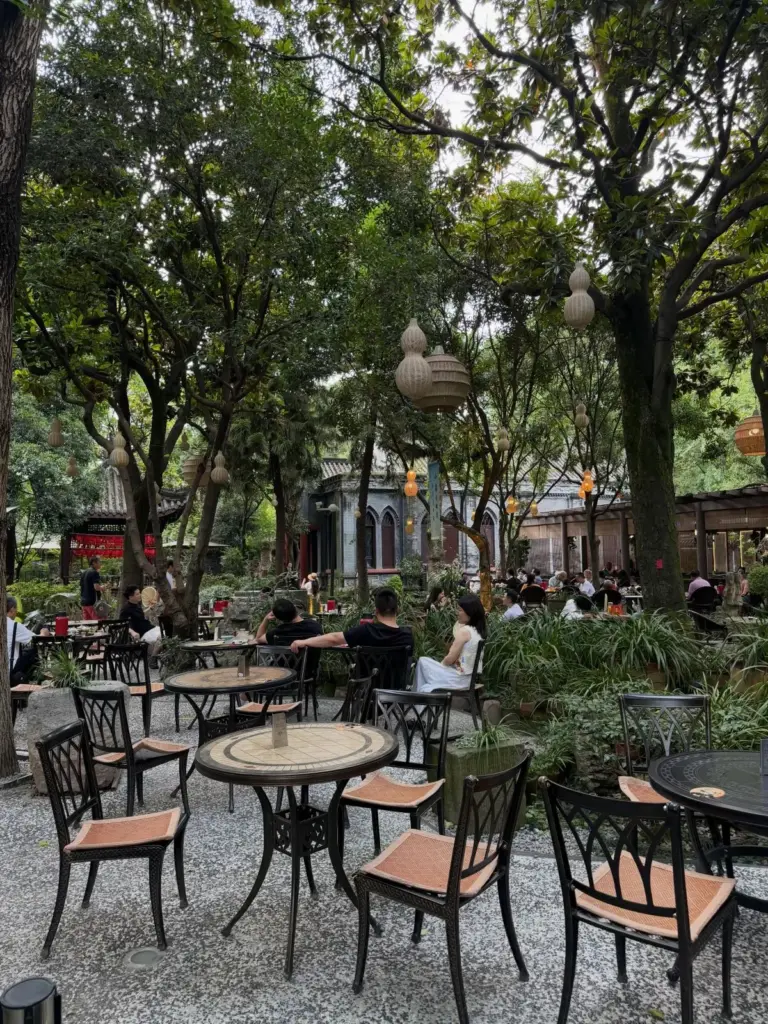
Situated on the western shore of the park’s artificial lake, Heming Teahouse is an open-air affair. There are no walls, no air conditioning, no pretension. Instead, you will find rows upon rows of simple bamboo chairs (竹椅, zhú yǐ) and small wooden tables arranged beneath a canopy of ancient trees and traditional tiled roofing. On a busy weekend morning, the teahouse can seat over a thousand guests, yet it never feels chaotic. There is a rhythm here, a communal exhale, that absorbs every visitor into its calm.
The Art of Gaiwan Tea (盖碗茶)
The tea at Heming is served in a gaiwan (盖碗) — a traditional lidded bowl consisting of three parts: the saucer (托, tuō) representing the earth, the bowl (碗, wǎn) representing humanity, and the lid (盖, gài) representing heaven. Together, these three components symbolize the harmonious relationship between humans and the natural world, a concept rooted in Taoist philosophy.
To drink from a gaiwan like a local, follow these steps:
- Hold the saucer with your left hand to stabilize the bowl.
- Use the lid with your right hand to gently sweep the tea leaves floating on the surface away from your lips.
- Sip slowly through the small gap between the lid and the bowl.
- Signal for a refill by simply leaving the lid slightly ajar or tapping the table gently. Attendants carrying long-spouted copper kettles will notice and top off your bowl with boiling water from a distance — a theatrical pour that is itself a beloved spectacle.
Tea Varieties to Try
Heming Teahouse offers a straightforward menu of traditional Sichuan teas. Prices are remarkably affordable, typically ranging from 15 to 40 RMB per bowl, with unlimited hot water refills included. Popular choices include:
- Jasmine Tea (茉莉花茶, Mòlì Huāchá): The most popular choice among locals. Fragrant, light, and refreshing, it pairs beautifully with a humid Chengdu morning.
- Green Tea (绿茶, Lǜchá): Often a local Sichuan variety such as Zhuyeqing (竹叶青), a delicate, slightly sweet tea grown on Mount Emei.
- Chrysanthemum Tea (菊花茶, Júhuāchá: A soothing, caffeine-light option with a gentle floral sweetness, traditionally believed to cool the body.
- Tieguanyin (铁观音): A semi-oxidized oolong tea with a rich, orchid-like aroma, ideal for those who prefer a deeper flavor.
The Morning Ritual: Sunflower Seeds and People-Watching
Ordering tea is only the beginning. The true Heming experience involves settling into your bamboo chair with a small plate of sunflower seeds (瓜子, guāzǐ) or pumpkin seeds and simply watching the world unfold. Locals crack seeds with practiced efficiency, chatting with neighbors, reading newspapers, or dozing in the dappled sunlight.
Around you, the park comes alive with activity:
- Tai Chi practitioners glide through slow, deliberate forms near the lakeside, their silk fans catching the morning breeze.
- Elderly dance groups gather near the pavilions, moving in synchronized steps to traditional folk music played from portable speakers.
- Calligraphers practice water calligraphy on the stone pavement, writing poetry with giant brushes that evaporate within minutes.
- Bird owners hang ornate wooden cages from tree branches, letting their songbirds serenade the crowd.
Tourists love spending an entire morning here, and for good reason. There is no agenda, no performance, no ticket price beyond the cost of your tea. Heming Teahouse is living culture, not a museum exhibit.
Best Times to Visit Heming Teahouse
- Early Morning (7:00 AM – 9:00 AM): The most authentic experience. Locals dominate, the air is cool, and the atmosphere is meditative. Ideal for photography and quiet contemplation.
- Mid-Morning (9:00 AM – 11:30 AM): The park is fully awake. Dance groups, Tai Chi classes, and social gatherings are in full swing. The energy is vibrant but unhurried.
- Afternoon (2:00 PM – 5:00 PM): A popular time for mahjong games and longer conversations. The light filtering through the trees is golden and warm.
- Avoid peak national holidays (especially Golden Week in October and Chinese New Year) if you prefer a quieter experience, as the park can become very crowded with domestic tourists.
The Matchmaking Corner (相亲角): Love, Resumes, and Parental Devotion
A Cultural Phenomenon Unique to Chinese Urban Parks
Tucked into a shaded corner of Renmin Park, usually along a stretch of pathway near the eastern or northern sections, you will encounter one of the most fascinating and genuinely moving cultural sights in all of China: the Matchmaking Corner (相亲角, Xiāngqīn Jiǎo).
Every weekend — and particularly on Saturday and Sunday mornings — dozens, sometimes hundreds, of elderly parents and grandparents gather here with a singular mission: to find a suitable spouse for their unmarried adult children. They carry printed resumes, laminate sheets, and handwritten cards, which they display on colorful umbrellas opened along the ground, clip to strings strung between trees, or pin to portable boards.
What You Will See
Each resume typically includes:
- The young person’s age, height, weight, and zodiac sign
- Educational background (university, degree, major)
- Occupation and annual income
- Property ownership status (a critical factor in China’s marriage market)
- Hukou (household registration) location, which determines access to social services
- Personal hobbies and character traits
- A photograph, sometimes professional, sometimes a casual snapshot
Parents stand beside their displays, scanning the crowd, occasionally approaching other parents whose children’s profiles seem compatible. Conversations are direct, practical, and often surprisingly tender. A mother might say, “My daughter is 29, a doctor, owns an apartment in Jinjiang District. She is kind but shy. I just want someone who will treat her well.”
Understanding the Cultural Context
For international visitors, the Matchmaking Corner can initially seem overwhelming or even intrusive. However, approaching it with cultural empathy reveals its deeper significance:
- Filial piety (孝, xiào): In traditional Chinese culture, marriage is not merely a personal choice but a family responsibility. Parents feel a profound duty to see their children settled.
- Social pressure: China’s historical one-child policy created intense focus on single children’s life milestones. Unmarried adults over 27 (women) or 30 (men) face the label “leftover” (剩女/剩男, shèngnǚ/shèngnán), a term that, while increasingly contested, still carries social weight.
- Pragmatism: In a society where real estate prices, career competition, and geographic mobility complicate romance, parents view matchmaking as a practical safety net.
- Community: The Matchmaking Corner is also a social event. Parents who return weekly form friendships, share gossip, and build a sense of community around their shared concern.
Etiquette for Visitors
The Matchmaking Corner is a public space, and visitors are welcome to observe. However, a few guidelines ensure respect:
- Ask permission before photographing individual resumes or parents’ faces. Many are comfortable being photographed, but courtesy matters.
- Do not mock or laugh. This is a sincere expression of parental love, not a spectacle.
- Engage politely if approached. Some parents may be curious about foreign visitors and may strike up a conversation. A smile and a few words of Mandarin go a long way.
- Visit on weekend mornings for the fullest experience. Weekdays are quiet, with only a handful of regulars.
Ear-Cleaning Services (采耳, Cǎi ěr): The Quintessential Chengdu Sensation
An Ancient Art Form
If Heming Teahouse represents the taste of Chengdu’s slow life, and the Matchmaking Corner represents its heart, then the ear-cleaning masters (采耳师, cǎi ěr shī) represent its touch. The tradition of professional ear cleaning, known as 采耳 (cǎi ěr) — literally “ear picking” or “ear harvesting” — has been practiced in Chengdu for centuries and is recognized as part of Sichuan’s intangible cultural heritage.
Within Renmin Park, you will encounter ear-cleaning practitioners stationed near the teahouse areas and along popular walking paths. They are easy to spot: they carry small wooden toolboxes, wear traditional aprons, and often advertise their services with a small sign reading 采耳 (cǎi ěr) and a set of prices. Some use a distinctive tuning fork or vibrating tool that produces a soft humming sound to attract attention.
The Experience
A typical ear-cleaning session lasts between 15 and 30 minutes and costs approximately 30 to 80 RMB, depending on the complexity of the service. Here is what to expect:
- You remain seated in your teahouse chair or on a small stool provided by the practitioner.
- The ear-cleaning master uses a variety of specialized tools: thin bamboo sticks, tiny metal spoons, soft feather ticklers, miniature tweezers, and fine brushes. A skilled practitioner may use over a dozen different implements during a single session.
- The process involves gently removing earwax, cleaning the ear canal, massaging the inner ear, and stimulating pressure points believed in traditional Chinese medicine to connect to overall health.
- The feather tickler phase is the most distinctive. The practitioner inserts a soft, fluffy feather or fine brush into the ear canal and rotates it gently, producing a tingling, ASMR-like sensation that many clients describe as deeply relaxing and mildly euphoric.
- The session often concludes with a light massage of the outer ear and surrounding temples, leaving you feeling refreshed and oddly peaceful.
Is It Safe?
Professional ear-cleaning masters in Renmin Park are generally experienced and hygienic. However, a few precautions are wise:
- Observe the tools before your session. Reputable practitioners sterilize their instruments or use disposable tips.
- Communicate any discomfort immediately. The process should feel pleasant, never painful.
- Avoid ear cleaning if you have an ear infection, a perforated eardrum, or recent ear surgery.
- Choose established practitioners who have a steady stream of local clients rather than approaching random touts.
Why It Matters Culturally
Ear cleaning in Chengdu is not merely a grooming service. It is a social ritual, a form of public self-care that reflects the city’s broader attitude toward pleasure and well-being. Just as a Neapolitan might linger over an espresso at a standing bar, a Chengdu local submits to an ear cleaning in full public view, eyes closed, face relaxed, utterly unbothered by the gaze of passersby. It is slow life made physical.
For tourists, having your ears cleaned while sipping gaiwan tea in the shade of a century-old elm tree is a once-in-a-lifetime sensory experience that no spa, no matter how luxurious, can replicate.
Beyond the Big Three: Other Treasures Within Renmin Park
While Heming Teahouse, the Matchmaking Corner, and ear-cleaning services are the park’s most famous draws, Renmin Park offers numerous additional attractions that reward leisurely exploration.
The Bonsai Garden (盆景园)
Tucked into a quieter section of the park, the Bonsai Garden houses an exquisite collection of miniature trees and landscape arrangements, some dating back several decades. The art of penjing (盆景) — the Chinese precursor to Japanese bonsai — emphasizes natural asymmetry, seasonal change, and the philosophical concept of “small within the large” (小中见大). Admission to the bonsai section is typically free or nominal.
The Artificial Lake and Boat Rentals
The park’s central lake, fringed with willows and dotted with lotus blossoms in summer, offers pedal boat and rowboat rentals for approximately 30 to 60 RMB per half-hour. Gliding across the water provides a peaceful perspective of the park’s pavilions and a welcome respite on hot afternoons.
The Xinhai Revolution Memorial
A solemn monument and memorial hall within the park commemorates the martyrs of the 1911 Xinhai Revolution, which overthrew the Qing Dynasty. The site includes sculptures, inscriptions, and quiet gardens. It offers a contemplative counterpoint to the park’s livelier sections and reminds visitors of the turbulent history beneath Chengdu’s placid surface.
Morning Exercise Culture
Arrive before 7:00 AM, and you will witness Renmin Park transformed into an open-air gymnasium. Locals engage in:
- Tai Chi and Qigong in slow, flowing groups
- Ballroom and folk dancing to recorded music
- Jianzi (毽子), a shuttlecock-kicking game resembling hacky sack
- Sword and fan exercises performed with graceful precision
- Singing clubs where retirees belt out revolutionary songs and Sichuan opera arias
This is not exercise as Westerners understand it — no lycra, no fitness trackers, no protein shakes. It is joyful, communal movement, performed in street clothes and slippers, driven by the simple desire to feel alive in the morning air.
Local Snacks and Street Food
Around the park’s perimeter and near its entrances, small vendors sell traditional Chengdu snacks:
- Tangyou guozi (糖油果子): Fried glutinous rice balls coated in caramelized sugar, crispy outside and chewy within.
- San da pao (三大炮): Sticky rice cakes pounded dramatically against a metal plate and rolled in soybean powder and brown sugar syrup. The name means “three cannon shots,” referring to the loud banging sound.
- Liangfen (凉粉): Cold jelly noodles dressed with chili oil, Sichuan peppercorn, garlic, and vinegar — a refreshing, fiery snack.
- Bingfen (冰粉): A cooling, translucent dessert made from nicandra seeds, served with brown sugar, hawthorn flakes, and peanuts. Perfect for humid summer days.
Planning Your Visit: A Suggested Slow-Life Itinerary
To truly absorb the spirit of Renmin Park, resist the urge to rush. Below is a suggested half-day itinerary designed for guests staying at the Celebrity Ruicheng Hotel.
7:00 AM – Depart the Hotel
Enjoy a light breakfast at the hotel or grab a bowl of dandan noodles from a nearby street vendor. Walk south along Renmin Middle Road toward the park.
7:20 AM – Arrive at Renmin Park
Enter through the main gate. Take a moment to orient yourself with a park map (available near the entrance). The morning air is cool, and the paths are populated with early exercisers.
7:30 AM – Morning Exercise Observation
Stroll along the lakeside paths and watch Tai Chi groups, dancers, and jianzi players. Do not hesitate to stop and watch. Locals are generally delighted by respectful observers.
8:15 AM – Settle In at Heming Teahouse
Claim a bamboo chair near the lake. Order a bowl of jasmine tea and a plate of sunflower seeds. Spend the next hour doing absolutely nothing but sipping, watching, and listening.
9:15 AM – Ear-Cleaning Session
Invite a nearby ear-cleaning master for a session. Close your eyes, relax, and experience the tingling serenity of traditional cǎi ěr.
9:45 AM – Explore the Matchmaking Corner
Walk to the matchmaking area. Browse the resumes, observe the conversations, and appreciate the quiet determination of parental love.
10:15 AM – Wander the Grounds
Visit the Bonsai Garden, the Xinhai Revolution memorial, and the lotus ponds. Rent a boat if the weather is pleasant.
11:00 AM – Snack Break
Sample tangyou guozi or san da pao from a park vendor. Sit on a bench and watch the late-morning crowd.
11:30 AM – Return to the Hotel
Walk back to the Celebrity Ruicheng Hotel for a rest, or continue into the nearby Kuanzhai Alley (宽窄巷子) district for lunch and further exploration.
Practical Tips for International Visitors
Language
While Renmin Park is a public space and English signage is limited, the experience requires minimal language skills. Tea orders at Heming are usually point-and-choose. Ear-cleaning masters communicate through gestures. A translation app on your phone is helpful but not essential.
Payment
Most vendors and teahouse attendants accept WeChat Pay (微信支付) and Alipay (支付宝). International visitors can now link foreign credit cards to these platforms, though carrying a small amount of cash (RMB) is advisable for older vendors and tipping.
Photography
The park is extraordinarily photogenic, especially in early morning light. However, always ask permission before photographing individuals, particularly at the Matchmaking Corner and during ear-cleaning sessions. A simple smile and a gesture toward your camera is universally understood.
Weather Considerations
Chengdu’s climate is humid and overcast for much of the year. Summers (June–August) are hot and rainy; bring an umbrella. Winters (December–February) are cool and damp. Spring (March–May) and autumn (September–November) offer the most comfortable conditions for a park visit. The famous Sichuan basin fog gives the park a mystical, soft-focus quality that photographers adore.
Accessibility
The park’s main paths are flat and paved, making it accessible for visitors with mobility challenges. However, some garden sections and the matchmaking corner may involve uneven ground or crowds. Wheelchair users should stick to the primary lakeside paths.
Why Renmin Park Matters: A Meditation on Modern China
In an era of high-speed rail, artificial intelligence, and relentless urban development, Renmin Park stands as a quiet act of cultural resistance. It is proof that a city can build skyscrapers, expand metro systems, and attract multinational corporations while still preserving spaces where an old man can spend four hours over a single cup of tea without anyone questioning his productivity.
For tourists, the park offers something increasingly rare in global travel: an authentic, uncommodified encounter with local life. There are no ticket booths for the main experience, no scripted performances, no gift shops selling mass-produced souvenirs. The “attraction” is simply people living their lives with a slowness and intentionality that many visitors from faster-paced societies find deeply moving.
Many travelers report that their morning at Renmin Park — the tea, the seeds, the ear cleaning, the dancing grandmothers, the matchmaking parents — becomes the single most memorable experience of their entire China trip. Not the Great Wall. Not the Terracotta Warriors. Not the Shanghai skyline. A bamboo chair, a bowl of jasmine tea, and the sound of a city choosing, deliberately and joyfully, to take its time.
Your Home Base for the Slow Life: Celebrity Ruicheng Hotel
After a morning of unhurried exploration, returning to a comfortable, well-located hotel makes all the difference. The Celebrity Ruicheng Hotel serves as an ideal base for discovering Renmin Park and the wider wonders of Chengdu.
Situated in the Qingyang District, the hotel places you within walking distance of the park, the Sichuan Provincial Library, Tianfu Square, and the vibrant dining scene along Renmin Middle Road. The hotel offers modern amenities, multilingual staff, and the kind of thoughtful service that allows guests to focus entirely on their cultural experiences rather than logistical concerns.
Whether you need assistance arranging a guided walking tour, booking tickets for a Sichuan opera performance, or simply requesting a wake-up call timed to catch the tai chi practitioners at dawn, the hotel’s team is available to help.
Celebrity Ruicheng Hotel
- Website: https://celebrityruichenghotel.com
- Telephone: +86-28-88033333
- Address: No. 68, Section 2, Renmin Middle Road, Qingyang District, Chengdu, Sichuan, 610061, China
Final Thoughts: Give Yourself Permission to Slow Down
The greatest gift Renmin Park offers is not a photograph, a souvenir, or a checklist item. It is permission. Permission to sit still. Permission to watch rather than do. Permission to let an hour pass with nothing to show for it but an empty tea bowl and a sense of peace.
Chengdu has been practicing this art for centuries. The park’s trees have shaded a hundred years of slow mornings. The tea has been steeped in the same gaiwans, the same way, for generations. The ear-picking tools have tingled in the same ears, under the same canopy of leaves, for longer than most nations have existed.
All you have to do is show up, sit down, and let the slow life wash over you.
The park opens early. The tea is hot. The bamboo chair is waiting.
慢慢来 (Màn màn lái) — Take it slow.
Planning a trip to Chengdu? Book your stay at the Celebrity Ruicheng Hotel and step into the slow life within minutes of your arrival. Visit https://celebrityruichenghotel.com or call +86-28-88033333 to reserve your room and begin your Sichuan story.